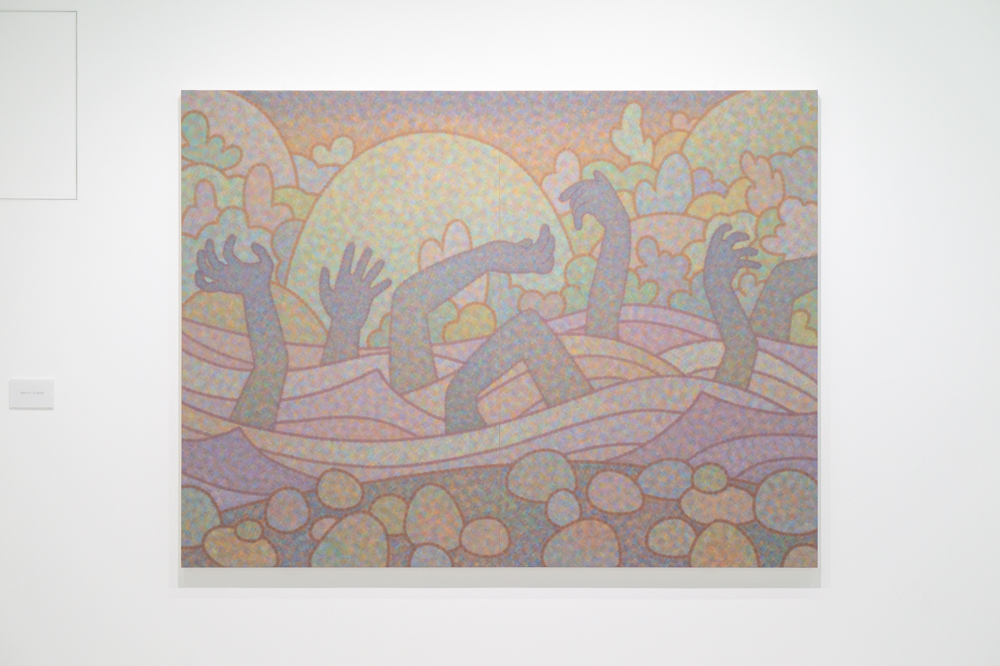
River Image / Awe
2024
wooden panel, washi (Kochi hemp paper), mineral pigments, pigments, animal glue
1500×2000mm
In Ekawasaki, Kochi Prefecture, where my paternal grandmother lived, fires were lit on the riverbank during Obon (a Buddhist period in summer when the spirits of the dead are believed to return to the world of the living) to welcome the souls of our ancestors. I came to think of the river as a path along which spirits travel. When I said I wanted to swim in the river during Obon, my grandmother and relatives would reply, “You’ll be taken away, so you mustn’t swim.” I was afraid, imagining something beneath the water reaching up toward me.
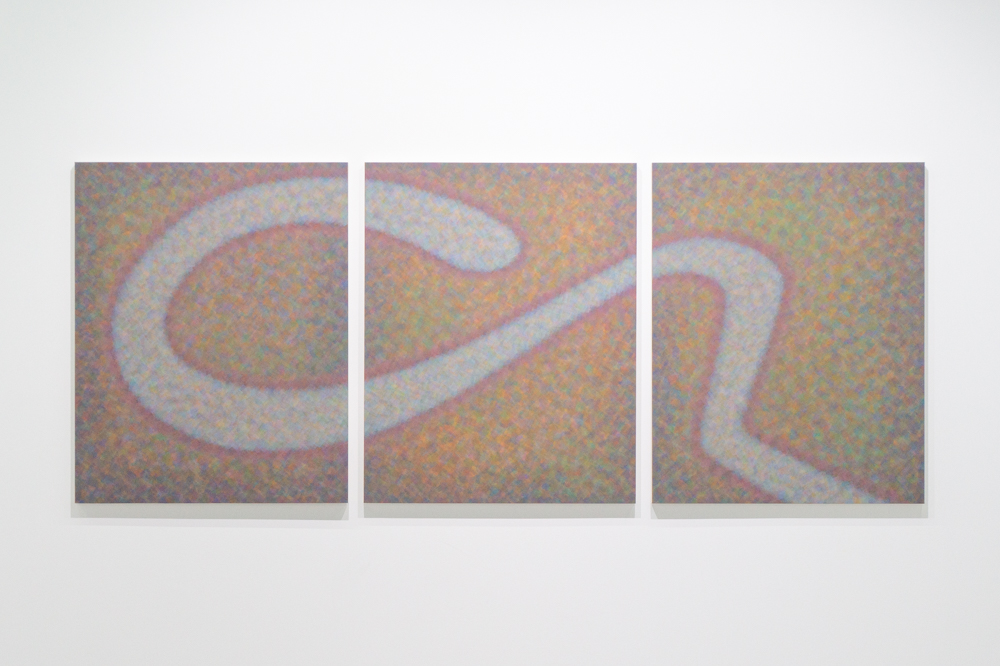
The Shape of a River / Kyū-Nakagawa
2025
wooden panel, washi (Kochi hemp paper), mineral pigments, pigments, animal glue
910×2260mm
The Kyū-Nakagawa (Old Nakagawa) in Tokyo is a river that forms a severed fragment of the Nakagawa, cut off by the excavation of the Arakawa Floodway. Many of Tokyo’s rivers today have been shaped by human hands; when viewed on a map, they begin to appear like drawings.
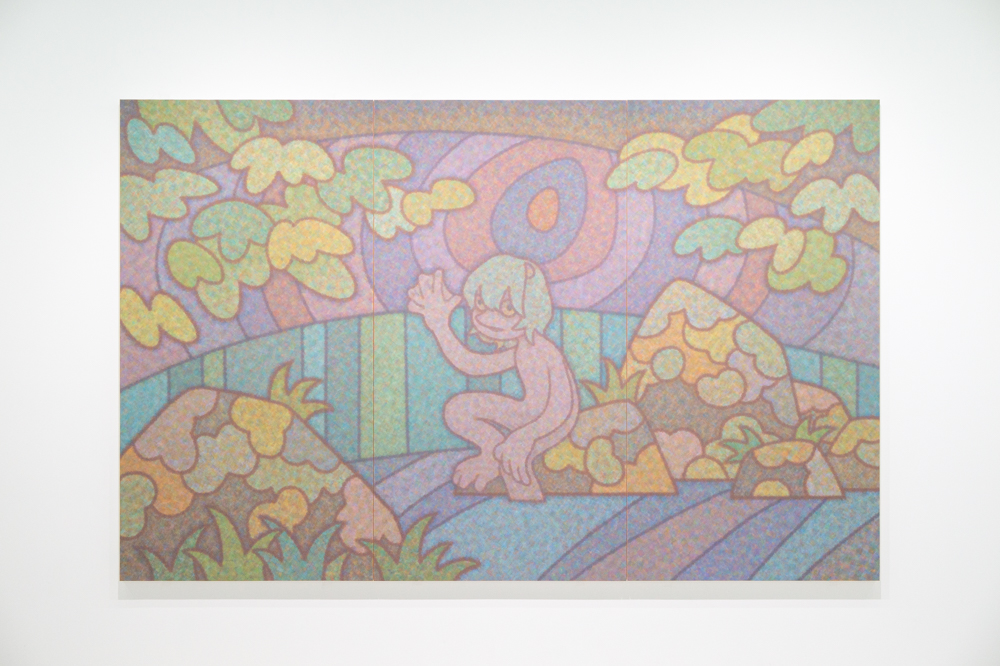
Gataro of Dobunko
2025
wooden panel, washi (Kochi hemp paper), mineral pigments, pigments, animal glue
1900×3000mm
Gataro is another name for the kappa, a supernatural being from Japanese folklore believed to live in and around rivers. Dobunko refers to a distinctive part of a river where the current becomes fast and the water is especially cold. This work is inspired by a traditional folktale of Gataro passed down in Yoshino, Nara.
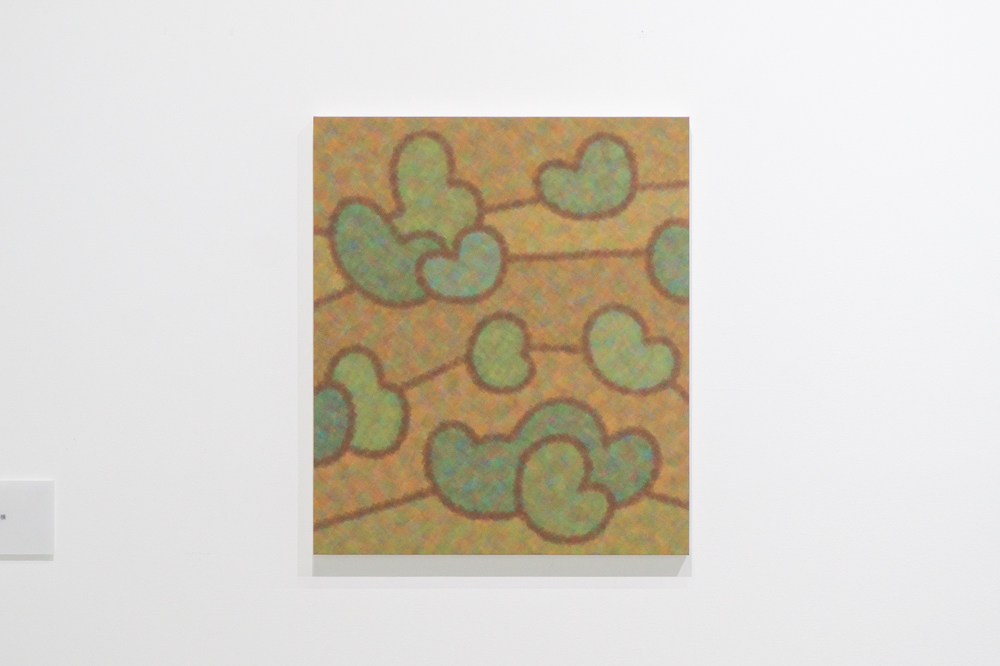
Grass
2024
wooden panel, washi (Kochi hemp paper), mineral pigments, pigments, animal glue
530×455mm
Grass growing along the riverbank of the Kizu River. It is one of my favorite views, seen from the window of a passing train.
Dream Bridge
2024
wooden panel, washi (Kochi hemp paper), mineral pigments, pigments, animal glue
530×455mm
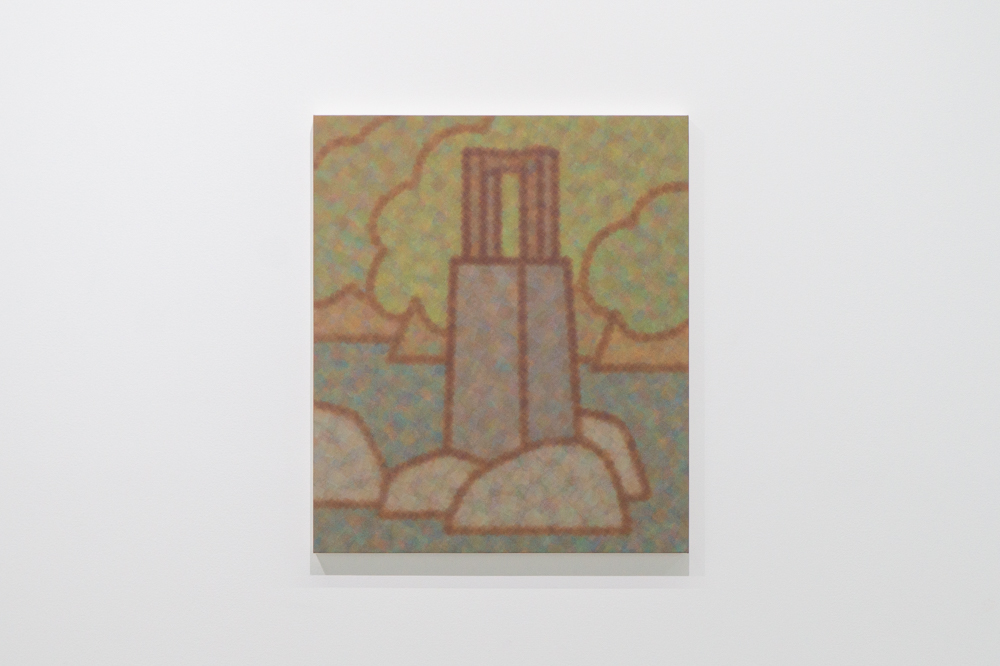
At Minoda no Fuchi along the Yoshino River in Tokushima Prefecture, a single old bridge pier stands alone. In the past, the only way to cross the river in this area was by ferry, and during times of high water, passage would sometimes be cut off. The construction of this bridge was a long-held wish of the local community; however, it was never completed, and only the pier remains.
It is the trace of a bridge that never became a bridge.
River Image / Shimanto River
2024
wooden panel, washi (Kochi hemp paper), mineral pigments, pigments, animal glue
1500×3000mm
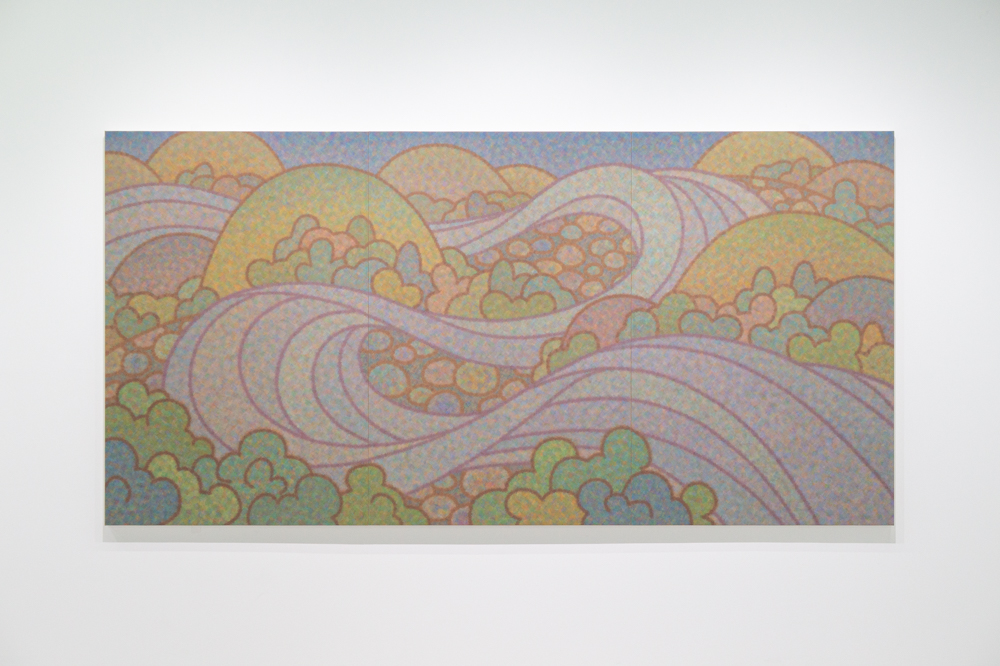
This painting depicts the Shimanto River of my hometown, a river I have known since childhood. Its winding course through the mountains; the stones of the riverbank that clatter underfoot as one walks; the mountains seen through a car window. The speed and coldness of the flowing water, and the changes of the seasons.
Leave It Behind
2025
wooden panel, washi (Kochi hemp paper), mineral pigments, pigments, animal glue
1167×910mm
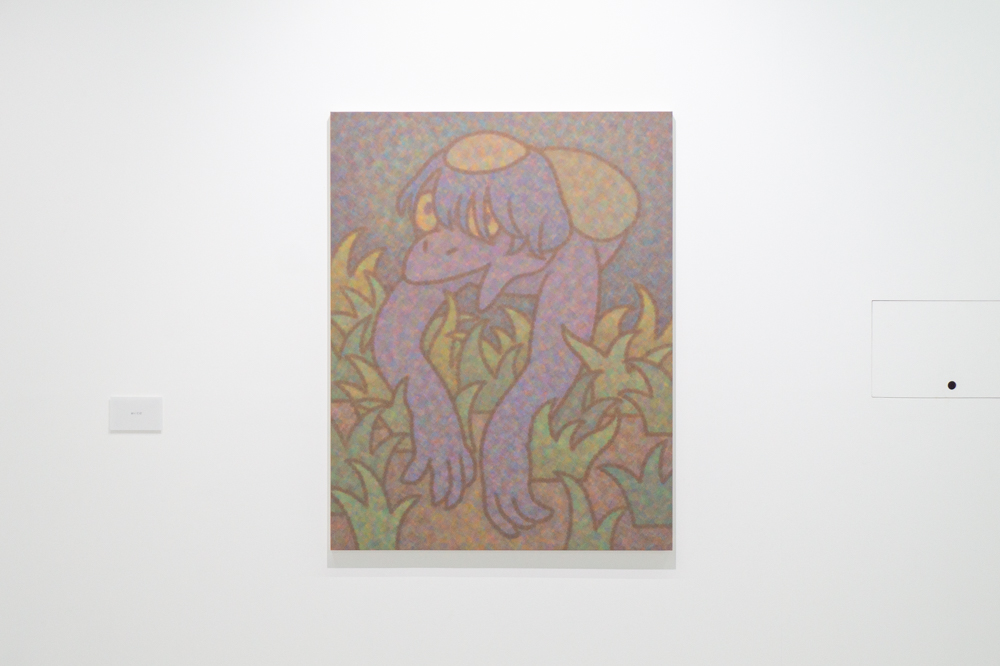
One of the legends known as the Seven Mysteries of Honjo tells the story of Oiteke-bori (“Leave-It-Behind Moat”). Long ago, a man was fishing at a moat. That day he caught an abundance of fish, and as he set off home in high spirits, a voice called out from nowhere: “Leave it behind… leave it behind.” Frightened, he hurried home and looked into his basket, only to find that not a single fish remained. This well-known ghost story is said to be the origin of the Japanese expression oitekebori, meaning to be left behind or abandoned, and it exists in many variations. One theory holds that the voice belonged to a kappa, to this day, a statue of a kappa stands in Kinshichō. The Seven Mysteries of Honjo refers to a group of ghost stories from Japan’s Edo period.
The Riverside of Some Day 2006–2025
2026
Video
6 min 44 sec
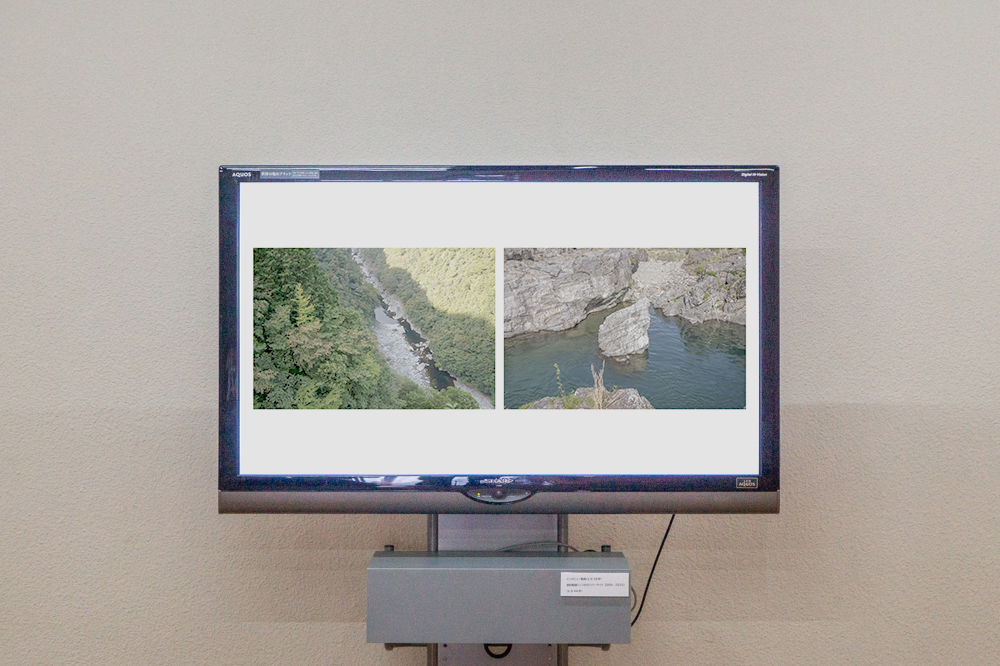
This work brings together photographs of rivers I have visited over the years.
The slideshow consists of 111 images, a number chosen for its visual resemblance to the kanji character 川 (“river”), which is composed of three vertical lines.